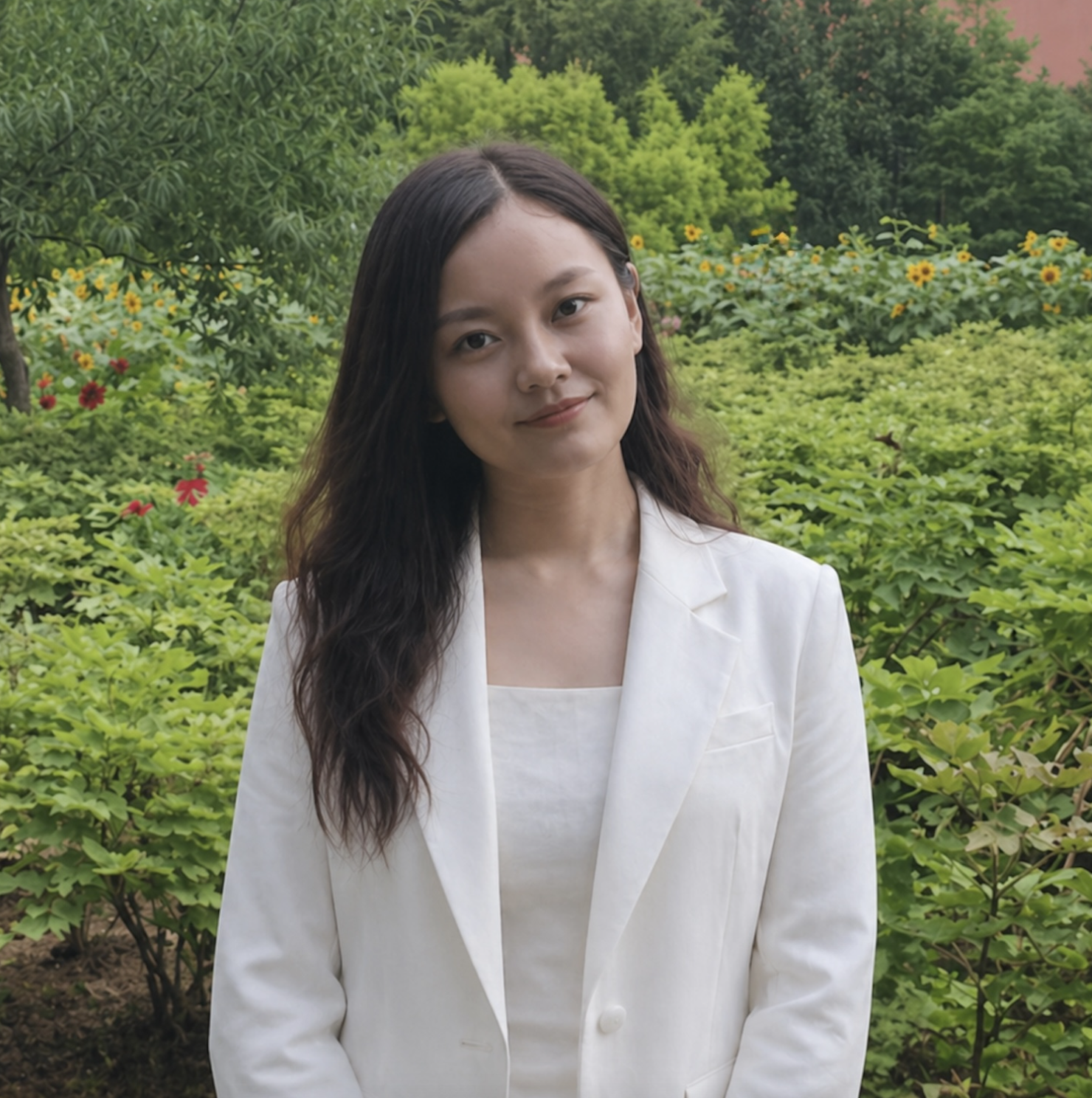
Qi (Katherine) Wang
Hello! I am a postdoctoral researcher at Boston University, Questrom School of Business. I am fortunate to be advised by Anita Carson and to work with Chris Dellarocas, Patricia Cortes, William Kahn, and Anandhi Bharadwaj (Emory). I did my PhD with Sarah Zheng at the University of Victoria and Xi'an Jiaotong University.
My research examines how AI transforms human expertise, work, and organizations. Grounded primarily in healthcare, I study how technologies and devices reshape care delivery, workforce dynamics, and organizational outcomes. I draw on causal inference, ML, NLP, and LLMs methods applied to administrative and healthcare data at the intersection of information systems and operations management.
My research has been awarded grants from the Business of AI Initiative at Boston University's Digital Business Institute. I co-proposed "AI-Enabled Organizational Learning in Healthcare", a project in collaboration with Boston-area hospitals, and work on "Generative AI and the Future of Work".
Publications and Submitted Papers
1. The Relative Indirect Effects of Technology Bias and Implicit Bias on Racial Disparity in Service Delivery and Sepsis Mortality
Production and Operations Management, 34(4), 667–677.
2. The Impact of Hospital Algorithm Adoption on Care Delivery, Outcomes, and Equity
Under major revision at Management Science.
- Selected to present at 2026 INFORMS Conference on Information Systems and Technology (CIST)
3. Generative AI Disclosure and Deployment in Creative Industries: Authenticity, Visibility, and Market Performance
Under major revision at Production and Operations Management.
4. The Impact of Process Standardization and Operational Failures on a Clinical Outcome
International Journal of Operations & Production Management, 1–20 (Online First).
- Best Paper Award, IJOPM Hong Kong Workshop 2026
5. AI-Enabled Voice-Based Mental Health Monitoring at Scale: A Real-World Deployment in an Industrial Workforce
Under review at Harvard Data Science Review.
Working Papers
6. Artificial Intelligence, Clinical Expertise, and Hospital Workforce Retention
In preparation for Management Science.
- Selected to present at 2026 Workshop on Empirical Research in Operations Management (Wharton School)
- Selected to present at 2026 MSOM Conference (Harvard Business School)
- Selected to present at 2026 AI and the Future of Work Conference (Wharton School)
7. Generative AI and the Informational Value of Educational Credentials: Evidence from the Master’s Margin
In preparation for Management Science.
- Selected to present at 2026 INFORMS Conference on Information Systems and Technology (CIST)
- Selected to present at 2026 AI and the Future of Work Conference (Wharton School)
8. Robotic-Assisted Surgery: Utilization and Clinical Outcomes
9. Less is More? Effects of Clinical Practice Variation on Patient Outcomes: The Mediating Role of Length-of-Stay
Works in Progress
10. Clinical Work and Professional Identity under Deployed Artificial Intelligence
11. Depression and Shopping Behavior Trajectories
12. Signaling into Saturation: Reskilling and Generative AI Exposure
13. Electric Vehicle Charging Infrastructure and Retail Traffic
Publications in Business Analytics
14. The Role of Social Media in Financial Risk Prediction: Evidence from China
Asia-Pacific Journal of Financial Studies, 51, 618–650.
15. Evolutionary Game Analysis of FinTech Transformation: A Social Co-governance Pattern of Peer-to-peer Lending Market in China
Frontiers in Psychology.
16. Determinants of individuals’ intentions to use central bank digital currency: Evidence from China
Technology Analysis & Strategic Management, 1–15.
17. Does investor sentiment enhance the impact of ESG ratings on firms’ financial performance? Evidence from China
Asian-Pacific Economic Literature.